


Learn how to make rice paper-wrapped spring rolls that are fresh, crunchy and delicious. They're easier than you think!
Fresh spring rolls, also sometimes called summer rolls or salad rolls, make a delicious snack or appetizer any time of year. You’ve likely seen the rice paper-wrapped rolls at Southeast Asian restaurants or picked up premade ones at the grocery store—but it’s also easy to make your own spring rolls at home! They are endlessly customizable and pair well with different types of dipping sauce.
What are spring rolls?
Originating in Southeast Asia, this variety of spring roll is a popular dish. Spring rolls are usually filled with fresh vegetables and thin rice noodles, and often include shrimp, tofu or meat, and fresh herbs. Typically served cold alongside a dipping sauce, they’re a crunchy appetizer or a light main dish.
Spring rolls and egg rolls are not the same. The latter has a crispy deep-fried shell, while spring rolls are uncooked and have translucent wrappers so you can take a peek at the colorful ingredients inside.
Ingredients for Spring Rolls
- Round rice paper wrappers: These wouldn’t be fresh spring rolls without rice paper. Look for rice paper wrappers in the Asian section of your grocery store. They come in flat packages similar to tortillas.
- Pork: Cubed cooked pork adds protein and heft to the spring rolls. You’ll also often see fresh spring rolls with shrimp or tofu.
- Sliced vegetables and dried cherries: Carrots, celery and dried cherries bring color and crunch to this spring roll recipe. We use romaine and spinach too.
- Sesame oil: Sesame oil dresses the filling without making it too moist. A filling with too much dressing will make the rice paper soggy.
- Crunchy add-ins: Wasabi-coated green peas and sliced almonds add flavor and texture.
- Dipping sauce: We keep it easy by using store-bought sesame ginger salad dressing.
Directions
Step 1: Prepare the filling

Use a chef’s knife or mandoline slicer to julienne the vegetables (this technique makes the pieces small enough to fit in your roll and ensures that you get a bit of everything in each bite). Roughly chop the dried cherries, and dice the pork into tiny cubes.
Place the romaine, spinach, carrot, celery, dried cherries and pork in a large bowl. Drizzle with sesame oil, and toss to coat.
Test Kitchen Tip: With any spring roll recipe, it’s important to prepare your filling first. Once the wrapper is wet, it will harden quickly and become more difficult to roll, so you need to get that filling ready to move.
Step 2: Hydrate the rice paper

Fill a large shallow dish about halfway with water (a pie plate works perfectly for this). Take a single sheet of rice paper and dip it into the water until it just starts to soften. This should take 10 to 15 seconds. Remove the rice paper wrapper from the water, allowing excess water to drip off, and place it on a flat surface, such as a plate or cutting board.
Test Kitchen Tip: Soak and then fill one rice paper wrapper at a time; don’t soak them all at once. And avoid over-soaking the rice paper. If you submerge it for too long, it will become too limp and sticky to use, and the wrapper will collapse on itself.
Step 3: Fill each spring roll
When the rice paper has softened, layer 1/4 cup of the pork and vegetable filling and a sprinkling each of almonds and peas in a strip across the bottom third of the wrapper. Leave some room at the edges.
Step 4: Wrap each spring roll

Fold the bottom edge over the filling. Then fold both sides of the wrapper inward. Roll it up tightly and place it on your serving plate with the seam side down. Repeat, starting with Step 2, until you’ve used up all the filling.
Test Kitchen Tip: If your spring roll feels sticky, don’t stress! Spring rolls are meant to have a soft and slightly sticky texture.
Step 5: Serve
That’s a wrap! Pour the sesame ginger dressing into a ramekin and serve it with the spring rolls.
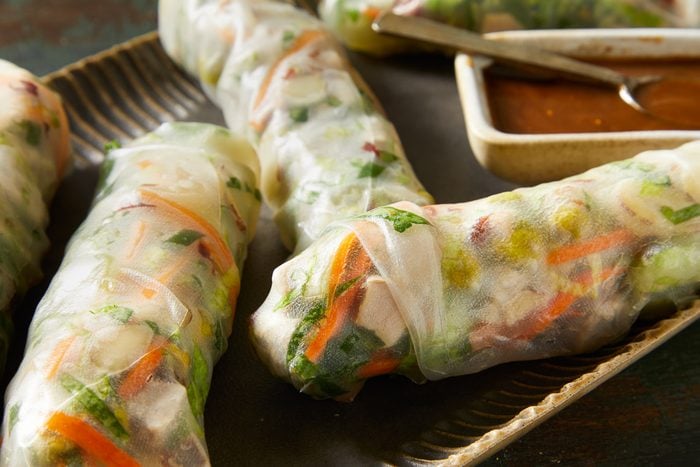
Spring Roll Filling Ideas
Now that you know the basics of how to make a fresh spring roll, it’s time to tweak the recipe to your liking. Got a bumper crop of cilantro or basil? Toss it into the mix. Prefer a different protein like shrimp, chicken or tofu? Swap it in for the pork. Or, go classic by adding cooked vermicelli (thin rice noodles).
Bell pepper strips, bean sprouts, thinly sliced red cabbage and fresh jalapeno slices are other types of produce that would be perfect tucked into a rice paper wrapper. No matter what you choose, the key is to fill each roll with about 1/3 cup filling.
For more inspiration, try these fresh spring roll variations:
- Simple spring rolls: Carrots, cucumbers, cooked vermicelli noodles, and fresh herbs like basil or cilantro make a simple and delicious filling for spring rolls.
- Tropical spring rolls: Fresh mango and Sriracha are the keys to making sweet mango avocado spring rolls with a light kick.
- Chicken peanut spring rolls: Store-bought coleslaw mix, shredded cooked chicken, cilantro, and thinly sliced red onions tossed in sesame oil, soy sauce and peanut oil make a spring roll filling that pairs perfectly with a peanut dipping sauce.
How to Store Spring Rolls
Spring rolls are best when they’re fresh. If you have leftovers, they will last for three to four days in an airtight container in the fridge—although the rice paper may get a little soggy with time. Regardless, the spring rolls tend to stick together if they’re touching, so space them out in the container to prevent the rice paper from ripping when you take them out.
Can you make spring rolls ahead of time?
Yes, you can make the spring roll filling ahead of time, but wait to fill and wrap them. Prep the filling the night before, then wrap and serve them the next day.
Tips for Spring Rolls
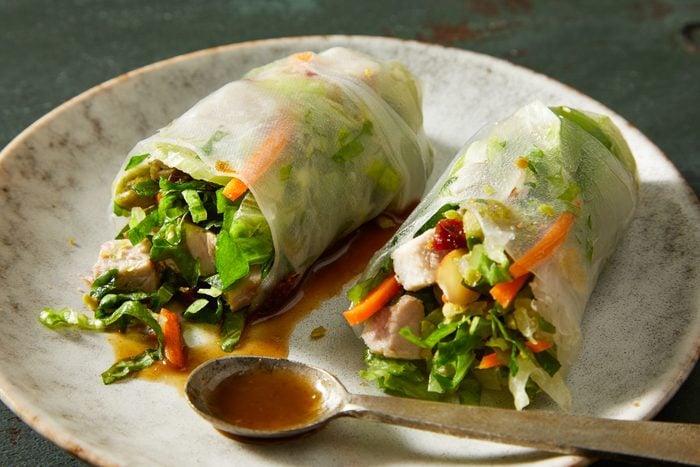
What dipping sauces should you serve with spring rolls?
Want something other than sesame ginger salad dressing as a dipping sauce? A sweet-hot Asian dipping sauce will add lots of nice tang, and a delicious satay sauce—made with plenty of peanut butter—is wonderfully savory and creamy. I also love a classic Yum Yum sauce with my spring rolls, or a homemade sesame dressing or ginger dressing.
What can you use instead of spring roll wrappers?
Spring roll wrappers are available at many grocery stores. They are often in the international aisle and come dried in a package. If you don’t have rice paper wrappers, you could use lettuce to make lettuce wraps.
What do you serve with spring rolls?
Spring rolls make the perfect cold appetizer for a gathering or a fresh side dish with any of these Thai recipes. You can also make spring rolls a meal by pairing them with one of these Asian-inspired soups or healthy salads.
Ingredients
- 2 cups thinly sliced romaine
- 1-1/2 cups cubed cooked pork
- 1 cup thinly sliced fresh spinach
- 3/4 cup julienned carrot
- 1/3 cup thinly sliced celery
- 1/3 cup dried cherries, coarsely chopped
- 1 tablespoon sesame oil
- 12 round rice paper wrappers (8 inches)
- 1/4 cup sliced almonds
- 1/4 cup wasabi-coated green peas
- Sesame ginger salad dressing
Directions
- In a large bowl, combine the first 6 ingredients. Drizzle with oil; toss to coat.
- Fill a large shallow dish partway with water. Dip a rice paper wrapper into warm water just until pliable, about 10-15 seconds (do not soften completely); allow excess water to drip off.
- Place wrapper on a flat surface. Layer salad mixture, almonds and peas across bottom third of wrapper. Fold in both ends of wrapper; fold bottom side over filling, then roll up tightly. Place on a serving plate, seam side down. Repeat with remaining ingredients. Serve with dressing.


Loading Popular in the Community
I thought rice paper wrappers would be a quick, fun way to turn salad ingredients into a hand-held snack or meal. I also make this with shrimp or add in cranberries. Go ahead—experiment! —Marla Strader, Ozark, Missouri
Recipe Creator

