


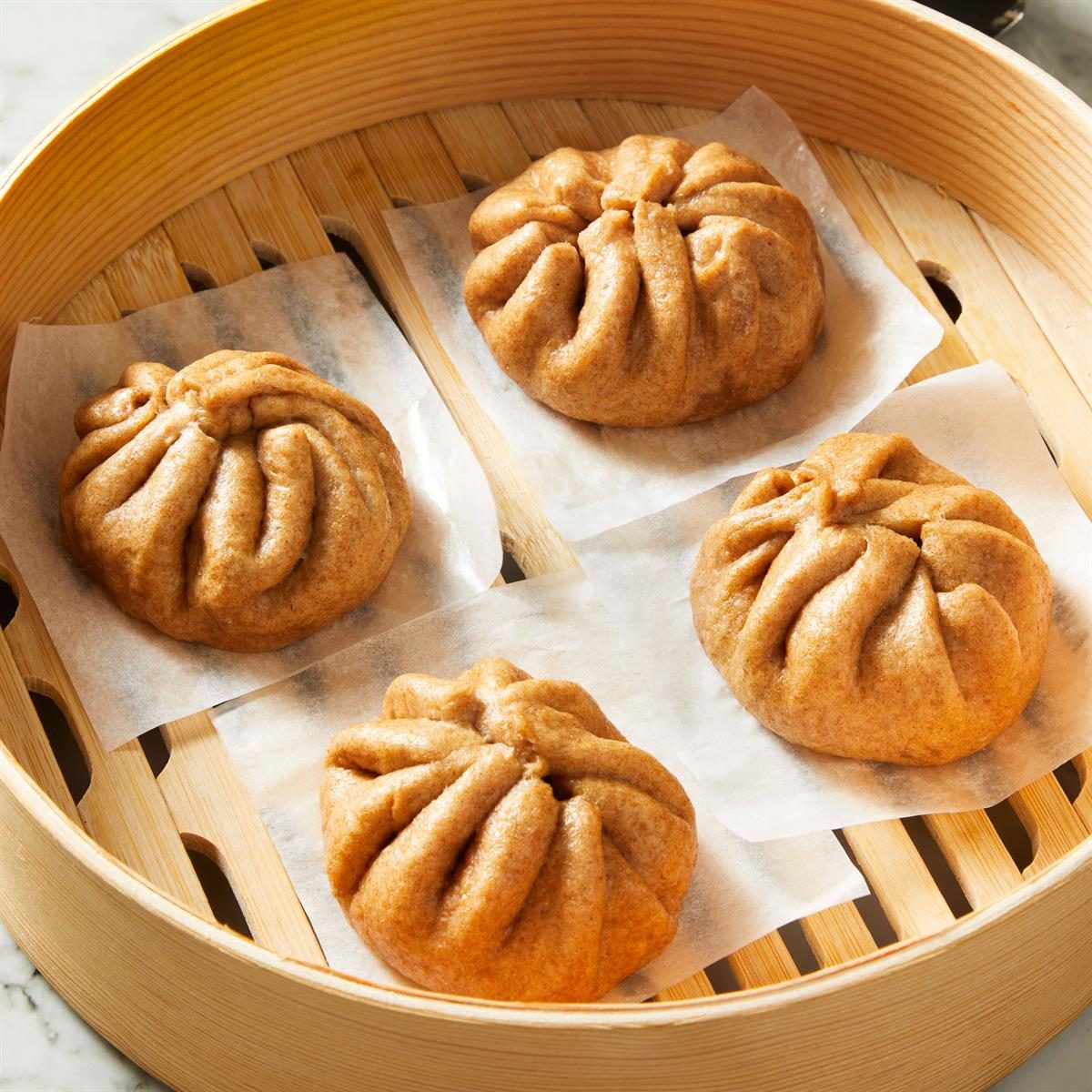
Craving bao buns? Make these popular Chinese steamed pork buns at home with our step-by-step family recipe.
Growing up in my parents’ bustling kitchen, I knew it was a special occasion if my dad brought down the bamboo steamers from the highest shelf and started making yeasted dough. It could only mean one thing: baozi, also known in the United States as steamed pork buns or bao buns.
Back then, there were only a couple places we could go when we were craving the fragrant, soft, minced pork–filled buns. Now that they’ve gained so much popularity, restaurants all over the country serve them in some variation. Times have changed, but it still feels like a special occasion to make baozi at home. While the process is labor-intensive, it can be a wonderful family activity. So, pull up your nearest and dearest, and learn about these delicious, steamed pork buns!
What are bao buns?
The answer is more complex than you might think. If you say “bao buns” to someone who grew up in a Chinese household, they might give you a quizzical look. The word bao in Chinese (包) essentially means “bun,” so the phrase “bao bun” is not very descriptive. Instead, there are many types of bao. The one most people think of is called baozi, a steamed bun with a savory filling—and the focus of this recipe. Other popular types of bao are cha shao bao (barbecue pork buns), sheng jian bao (pork buns that are pan-fried after steaming), gua bao (pork belly buns that were popularized in America by chef David Chang) and xiao long bao (known as soup dumplings in the U.S.).
How to Make Bao Buns
The ingredients for baozi are simple. The tricky part is the assembly, but I’ll walk you through each step! I’m sharing my dad’s recipe, adapted with tips and tricks that I learned from friends and videos through the years. The biggest change from my dad’s recipe is that I provide measurements; many Chinese home cooks, including those in my family, don’t believe in measuring.
Eventually, you should be able to tell how much seasoning is needed by the fragrance and texture. You can certainly work up to that level of expertise, but below you’ll find measurements to help get you started.
Ingredients for Bao Buns
- Flour: Purchase unbleached whole wheat flour for this baozi recipe. It has a lot of strength, which will help the bao buns hold their shape.
- Yeast: Make sure to use active dry yeast, not instant yeast. More importantly, check its expiration date—especially if your yeast has been sitting in the cabinet for a while. Expired yeast may not rise, and won’t give you those pillowy bao buns.
- Ground pork: Traditional baozi are made with a simple ground pork filling.
- Napa cabbage: Napa cabbage is available at most grocery stores. It’s mild and subtly sweet with tender leaves.
- Soy sauce: Soy sauce adds a lovely, deep umami flavor to the filling. Look for one of the best soy sauce brands at the store.
- Chinese cooking wine: Also known as Shaoxing, Chinese cooking wine is a fermented rice wine made with a small amount of wheat. It’s not really a drinking wine, and is best for cooking.
- Gingerroot: Freshly minced gingerroot adds zip and zing. Pro tip: Peel your ginger with a spoon!
- Sesame oil: Sesame oil adds a pleasantly toasty, nutty fat to enrich the filling.
Directions
Step 1: Mix the dough

In a small bowl, dissolve the granulated sugar in the warm water. Add the active dry yeast, and let the mixture sit until it becomes frothy and foamy, about 10 minutes.

Place the unbleached whole wheat flour in a large bowl. Gradually add the yeast mixture, stirring until it’s well combined with the flour. Keep in mind that the dough may be sticky.
Step 2: Knead the dough

Turn the dough out onto a floured surface. Knead it until it’s smooth and elastic, 10 to 12 minutes.
Editor’s Tip: The dough’s texture will start out velvety soft, but you need it to be firm enough to hold the filling without breaking. The more robust your kneading, the better!
Step 3: Let the dough rise

Place the dough in a greased bowl, turning once to grease the top. Cover the bowl with a clean tea towel or piece of storage wrap and let it rise in a warm place until it has doubled in size, about 40 to 60 minutes.
Editor’s Tip: I preheat the oven to the lowest setting possible, turn it off, then place my covered bowl inside.
Step 4: Make the filling

Meanwhile, in a large bowl, combine all the filling ingredients. Refrigerate the filling until you’re ready to use it.
Editor’s Tip: You want the filling to be cold so that the juices don’t separate and spill while you wrap.
Step 5: Divide the dough

Punch down the dough, and lightly knead it to remove any large air bubbles.
Using a sharp chef’s knife or bench scraper, divide the dough into 14 pieces. Roll each piece into a 1/4 inch-thick oval.
Step 6: Wrap the bao buns

Place one oval in your palm, then place a spoonful of pork filling in the center. Pleat the edges of the dough until they’re sealed. Pinch the top to seal it shut. Repeat with the remaining ingredients.
An ideal baozi should have 12 to 16 pleats. Be patient with yourself if yours don’t look like they came from a restaurant! Some professional chefs have reported practicing three to six months every day to perfect this wrapping technique.
Editor’s Tip: Don’t over-stuff, or the filling will spill out as you wrap. The thumb of your hand that’s holding the bao can help push down any filling that threatens to spill. You can also place the wrapper on a flat surface and use both hands to pleat and spin the bao.
Step 7: Steam the bao buns

In a Dutch oven, place a steamer basket over 1 inch of water. Line the basket with cabbage leaves or squares of parchment the size of the buns.
In batches, place four buns in the steamer basket. Bring the water to a boil, then reduce the heat to maintain a simmer. Steam the bao buns, covered, until a thermometer inserted into them reads 165°F, 18 to 20 minutes.
Carefully remove the lid to avoid dripping condensation onto the buns. If desired, serve the bao buns with black vinegar or chili crisp oil.
Editor’s Tip: I use bamboo steamers, but you can also use a double boiler, or even a bowl placed in a pot filled with 2 inches of water if you’re in a pinch.

Bao Bun Variations
- Try another meat: You can use preground pork, but for more texture you could alternatively buy a piece of pork shoulder, loin or belly and mince it at home. You could also use a different kind of meat, like chicken or beef.
- Add veggies: My family also uses napa cabbage, a popular addition to pork dumplings and bao alike. You can customize your filling by mixing in your favorite vegetables, like grated carrot, mushrooms and scallions.
- Go meatless: Though baozi are most often meat buns, they can also be made vegetarian. Use a meat substitute, or do as my family does and use a mixture of firm tofu, chopped bean thread noodles, cabbage, carrot and mushroom.
How to Store Bao Buns
Allow leftover bao buns to cool to room temperature, then place them in an airtight container in the fridge for up to four days. Try to make sure they’re not touching or sitting on top of one another, or they may stick together. Reheat them in the microwave, covered with a damp paper towel, in 20-second increments until they’re heated through.
Can you freeze bao buns?
Yes, you can freeze bao buns. Allow them to cool completely to room temperature, then place them on a parchment-lined baking sheet, making sure they’re not touching. Place them in the freezer, uncovered, until they’re frozen through, about one to two hours. Transfer them to a zip-top freezer-safe bag and try to remove as much air as possible. Freeze them for up to three months.
Bao Buns Tips

How do you serve bao buns?
Dipping sauce for baozi can be as simple as equal parts soy sauce and vinegar with finely sliced threads of fresh ginger. For those who like spice, you can also add chili powder or hot sauce. My favorite dish to eat with baozi is Chinese beef noodle soup, and no Chinese meal is complete without some cooked greens.
Why didn’t my bao buns rise?
Your bao buns may not have risen if the water was not warm enough or was too warm for the yeast. If the yeast does not become foamy and frothy after 10 minutes during the first step, discard it and try again. Check the temperature of your water and look for an expiration date on the yeast packet to ensure it’s still potent.
My pleating didn’t turn out well. What do I do?
Wrapping is the most difficult and delicate part of the process. You can expect your first baozi to be messy, much like the first pancake that goes in the pan! With baozi, practice makes perfect, so why not make a tradition of it? Gather friends or family to mix their favorite fillings and practice their pleating techniques. If you wrap more baozi than you can eat, put them in a storage container and freeze them to steam as a quick snack on another day.
Ingredients
- dough:
- 2-1/4 cups unbleached whole wheat flour, plus extra for rolling
- 1 teaspoon active dry yeast
- 1 teaspoon sugar
- 1 cup warm water (110° to 115°)
- filling:
- 1 cup ground pork (8 ounces)
- 1/2 cup finely chopped napa cabbage
- 3 tablespoons soy sauce
- 2 tablespoons Chinese cooking wine (Shaoxing)
- 1 tablespoon minced fresh gingerroot
- 1 tablespoon sesame oil
- Optional: Black vinegar and chili crisp oil
Directions
- In a small bowl, dissolve sugar in warm water. Add yeast; let sit 10 minutes. Place flour in a large bowl. Gradually add yeast mixture, stirring until well combined (dough may be sticky).
- Turn onto a floured surface; knead until smooth and elastic, 10-12 minutes. Place dough in a greased bowl, turning once to grease top. Cover and let rise in a warm place until doubled, 40-60 minutes.
- Meanwhile, in a large bowl, combine all filling ingredients. Refrigerate until use.
- Punch down dough; lightly knead to remove any large air bubbles. Divide dough into 14 pieces. Roll each piece into an oval, about 1/4-in. thin.
- Place oval in your palm, place a spoonful of pork filling in center. Pleat edges of dough until sealed; pinch top to seal. Repeat with remaining ingredients.
- In a Dutch oven, place a steamer basket over 1 in. water. Line basket with cabbage or squares of parchment the size of the buns. In batches, place 4 buns in basket. Bring water to a boil. Reduce heat to maintain a simmer; steam buns, covered, until a thermometer reads 165°, 18-20 minutes. Carefully remove lid to avoid dripping condensation onto buns. If desired, serve with black vinegar or chili crisp oil.

Loading Popular in the Community

