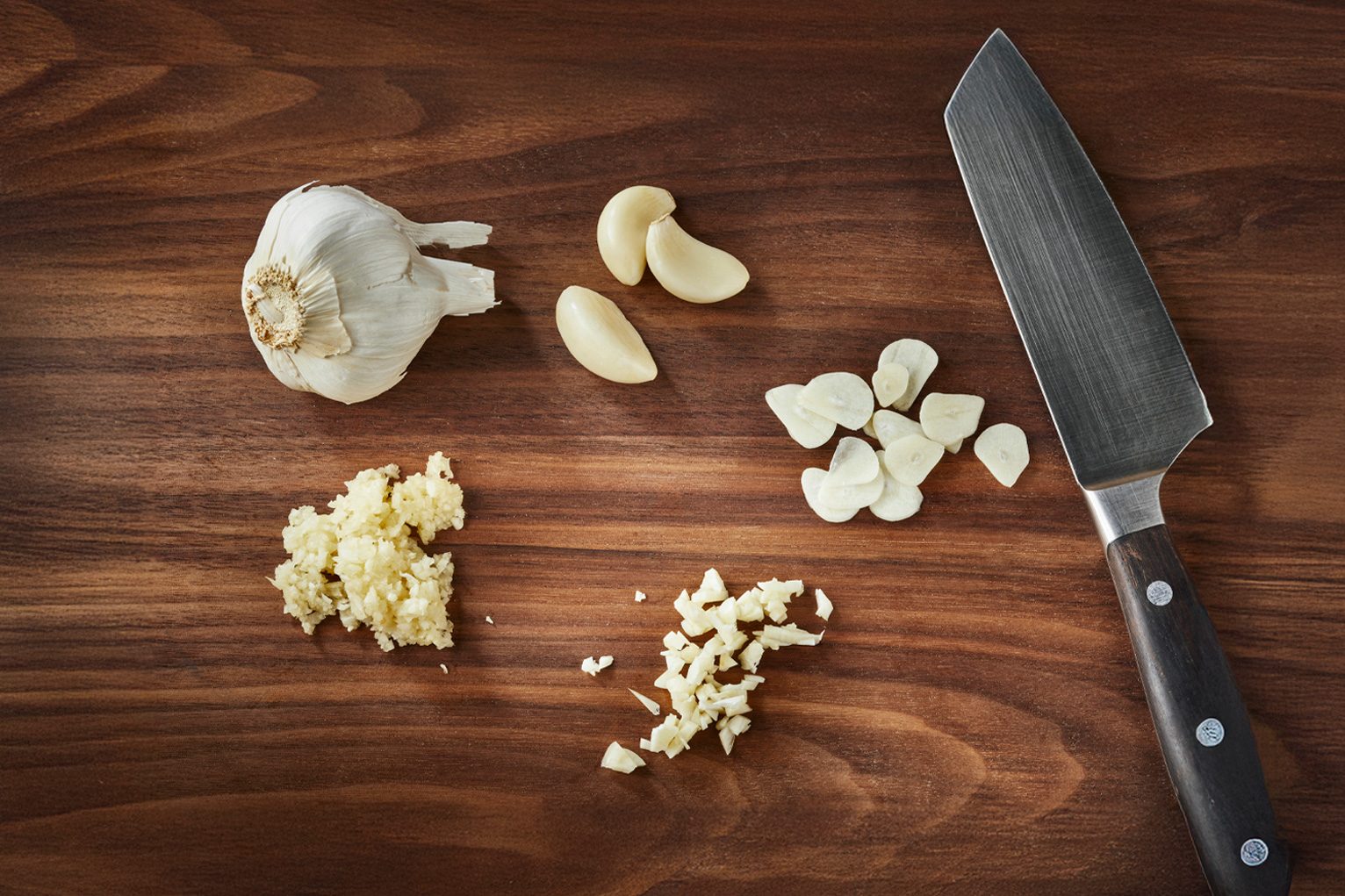
The same garlic clove can be sweet and subtle or sharp and intense. It all comes down to how you cut it.
Garlic is one of those familiar ingredients you often reach for without really thinking about it. You grab a couple cloves, give them a quick chop or smash, and move on. But if you’ve ever followed a recipe that very specifically calls for sliced garlic instead of minced, or whole cloves instead of grated, there’s a reason for that level of fussiness.
The way you cut garlic doesn’t just change how it behaves in the pan; it changes how it tastes. The same clove can come across sweet and mellow or sharp and assertive, depending entirely on how much damage you’ve done with your knife. Once you understand what’s going on, you can adjust garlic flavor on the fly, whether you’re following a recipe to the letter or just letting your culinary creativity take over.
Why do different garlic cuts affect its flavor?
Garlic’s signature bite comes from a compound called allicin. Interestingly, a whole clove doesn’t contain allicin at all; it’s produced only after garlic’s cell walls are broken down by slicing, chopping or crushing. The more you break down the garlic, the more cells you rupture—and the more allicin is produced.
That’s why a whole clove gently cooked in oil tastes sweet and nutty, while finely grated garlic can feel sharp enough to announce itself from across the room.
Time plays a role, too. Once garlic is cut, allicin continues to develop. Let minced or pasted garlic sit for a few minutes, and its flavor will intensify.
How to Choose the Right Garlic Cut for Your Recipe
If a recipe doesn’t spell it out—or if you’re cooking by instinct—here’s how to pick the right cut based on the flavor you’re after.
For mild garlic flavor:
Whole cloves are the soft-spoken option. Because the clove stays mostly intact, very little allicin forms. Slowly cooking whole cloves in oil (hello, garlic confit) brings out a gentle sweetness and a faint nuttiness instead of a sharp bite. The oil becomes subtly garlicky, and the cloves themselves turn soft, spreadable and surprisingly tame.
For moderate garlic flavor:
Sliced garlic lives comfortably in the middle. Some cells are broken, so you get garlic flavor without it taking over your dish. This is a good choice for sauteed greens, roasted vegetables and any dish where garlic should be present but polite.
For strong garlic flavor:
Minced garlic is where things can start to get assertive. Finely chopping cloves ruptures a lot more cells, creating a noticeable hit of allicin and that unmistakable garlicky punch. It’s ideal for sauces, pastas and mashed potatoes—dishes where the garlic isn’t just background noise.
For a very strong garlic flavor:
Garlic paste is garlic’s boldest interpretation. Grating garlic or smashing it into a paste with salt breaks down nearly every cell, producing maximum allicin and a distinctly sharp, pungent flavor. This is the move for pesto, aioli and garlic bread—recipes where garlic is meant to show up and make its presence known.
Once you get a feel for how garlic works, it stops being a one-size-fits-all ingredient. Some dishes want garlic that whispers. Others want garlic that kicks the door open. Your knife decides which one you get.
Related: