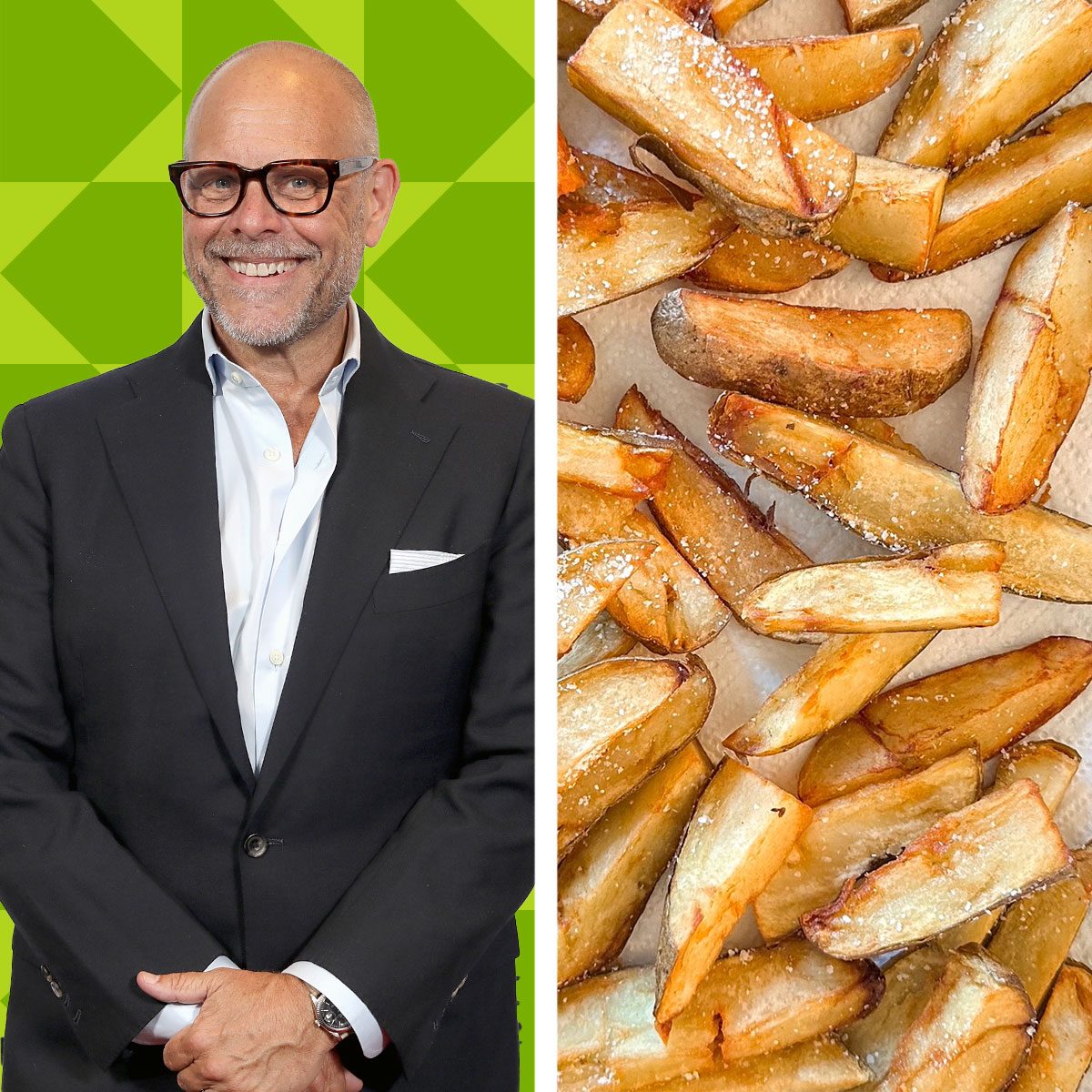
Alton Brown's secret for a cleaner way to make french fries is genius.
A great french fry should be crisp on the outside and fluffy in the middle. And there’s a whole process to get that perfect texture. I make homemade fries often enough to know that the usual double-fry method works. But it also makes a mess, requires vigilance and involves lowering raw, water-heavy potatoes into hot oil and saying a silent prayer of protection.
So when I came across Alton Brown’s french fry method—which skips multiple frying rounds in favor of frying baked potatoes—I realized I’d somehow missed a very elegant solution to a very familiar problem.
The Reason Homemade Fries Make Such a Mess
Traditional french fries are messy largely because they start with raw potatoes. Classic methods soak cut potatoes to remove excess surface starch, then dry them thoroughly, fry once, rest, and fry again. The goal is to control moisture, prevent sticking and build a crisp exterior without the potatoes breaking down or turning greasy.
It’s effective—but it’s also why making fries at home can feel chaotic. Water and hot oil don’t mix gently. Even careful cooks end up with splattering oil, burned forearms and fries that absorb far too much oil.
How Alton Brown Makes French Fries
View this post on Instagram
Alton’s solution is to remove the moisture problem before the oil ever comes into play.
He insists that russet potatoes are the only potatoes “from which decent fries can be fabricated,” and his process starts by treating them like baked potatoes first. Wash the potatoes, pierce them with a fork, lightly oil and salt them and bake at 350°F until tender. After that, let them cool completely and refrigerate overnight.
Only the next day do they become fries.
Once chilled, cut the potatoes into thick, half-inch strips and fry them once. No par-fry, no second plunge. Alton uses a wok filled with peanut oil heated to 375° and sets up what he calls a “landing pad”: a sheet pan lined with paper towels, topped with a cooling rack, plus a spider for quick, controlled transfers out of the oil.
My Thoughts After Trying Alton’s Method

This method worked beautifully. Instead of dramatic pops and potentially painful splatters, the oil bubbled gently and predictably the entire time.
I usually reach for a Dutch oven when frying, but when Alton calls for a wok, you use a wok. The wide surface area kept the oil shallow and responsive, the sloped sides helped contain any splatter, and the shape made it easy to stir and retrieve the fries without crowding or fuss. Once again, Alton delivers.

As for the fries themselves? They turned out even better than my usual double-fry version. They were less greasy, deeply crisp on the outside and soft and pillowy in the center. Because the oil’s only job was to create texture—not cook the potato—it all felt far more precise and controlled.
The only real downside is timing. This is not a method for spontaneous fry cravings. You have to commit the day before, which isn’t always practical when the urge for french fries strikes suddenly and insistently.

That said, if you plan ahead, this method is cleaner, safer and genuinely superior. It’s a smarter way to make fries—exactly what you’d expect from someone who has spent decades asking not just how we cook things, but why.
Related: